


 Categories


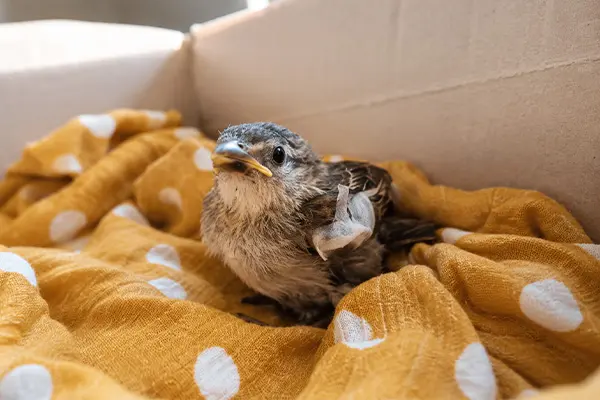


In their first few weeks of life, baby birds are extremely vulnerable: they have trouble regulating their body temperature, their immune systems are still developing, and their nutritional needs are critical.
To guide you through this process and ensure that your little companion grows up strong and healthy, we’ve put together this comprehensive guide covering the fundamentals of their health and well-being.
The artificial nest for ideal temperature and environmental control
A baby bird does not yet have the feathers needed to regulate its own body temperature, so recreating a safe thermal environment is the first step toward its survival:
- Controlled temperature: Depending on how old it is, a chick needs a constant environment between 30°C and 35°C. You can use an incubator or a modified box with a heating pad or heat lamp, always making sure the heat source does not come into direct contact with the bird to prevent burns.
- The right substrate: Cover the bottom of the nest with absorbent paper towels or coarse wood shavings. Avoid newspaper (the ink is toxic) and pine shavings entirely.
- Environment hygiene: Change the substrate frequently. The accumulation of feces creates moisture, which can cool the chick’s body and promote the growth of fungi

Nutrition During the Growth Stage
Hand-feeding a baby bird requires patience and an understanding of certain essential biological principles:
- Crop feed: Always use commercial formulas specifically designed for raising birds. Mix it with warm water so that the final temperature of the feed is between 38°C and 39°C. If you give it to them cold, their digestive system will shut down; if it’s too hot, you could cause severe and irreversible burns to their crop.
- The golden rule for the crop: Before offering a new feeding, make sure the crop is completely empty. Feeding a chick on food that has already fermented or been retained from the previous feeding can cause severe bacterial infections. Ideally, the crop should be completely emptied once a day, usually overnight.
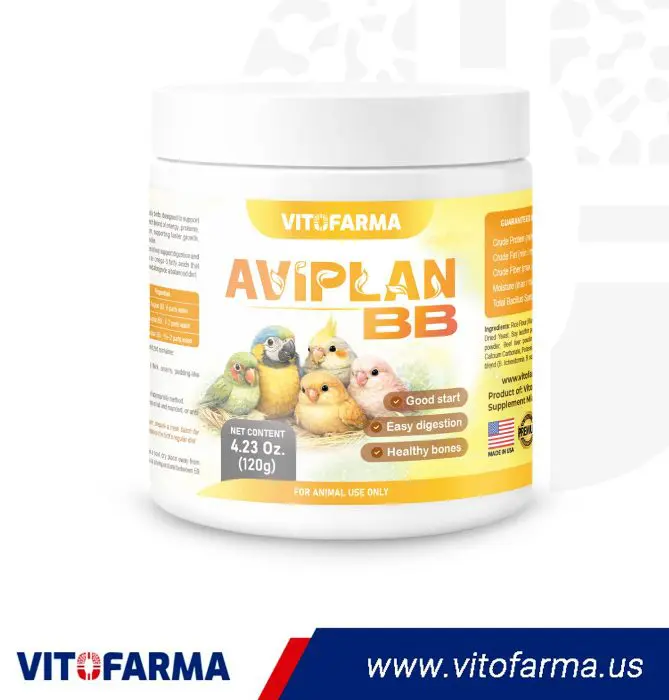
Boost your growth with Aviplan BB
A chick grows at an astonishing rate: in a matter of days, it doubles in size, develops its internal organs, and expends an enormous amount of energy on feather development. To ensure that this exponential growth occurs without deficiencies or weaknesses, the basic diet must be enriched.
This is where Vitofarma’s Aviplan BB becomes an indispensable tool for every breeder. This specialized 120-gram supplement has been carefully formulated for the early stages of a bird’s life, providing multiple benefits:
- Optimal bone development: Provides key vitamins and minerals that ensure proper skeletal formation, preventing common deformities in the legs and wings during rapid growth.
- Immune support: Strengthens the baby bird’s natural defenses during its most critical stage, helping it effectively resist environmental diseases.
- Strong, radiant plumage: Nourishes the follicles from within so that the first feathers grow in dense, healthy, and resilient, with their natural colors clearly defined.
Strict hygiene
A baby bird’s immune system cannot fight off aggressive bacteria, so strict hygiene is essential when handling it:
- Sterilizing equipment: Syringes, feeding tubes, spoons, or containers used to prepare and administer food must be thoroughly washed and disinfected after each use.
- Post-feeding cleanup: After you finish feeding the chick, it’s normal for bits of porridge to remain around its beak. Gently clean the area with a gauze pad lightly moistened with warm water. If the porridge dries on its skin, it will quickly become a breeding ground for fungal infections (such as candidiasis).
An adult bird’s song, vitality, and longevity are determined during its first few weeks of life. Providing a warm nest, loving care, and the nutritional support of Aviplan BB is the best investment you can make to ensure your little bird successfully takes flight toward a full and healthy life.


